

Home
Featured Content
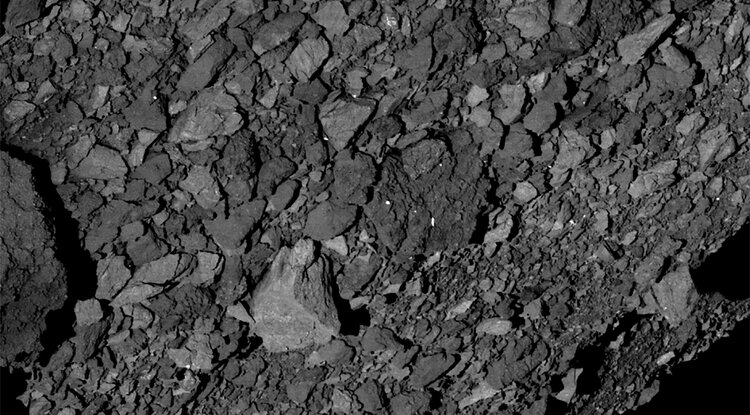
An Odd Ball in Space: OSIRIS-REx Spacecraft Studies Asteroid Bennu Up Close
The first close-up observations by the OSIRIS-REx spacecraft of its target, asteroid Bennu, confirm much of the ground-based observations but reveal new details that pose a challenge to the mission’s objective of bringing back a sample of pristine material from the birth of our solar system.
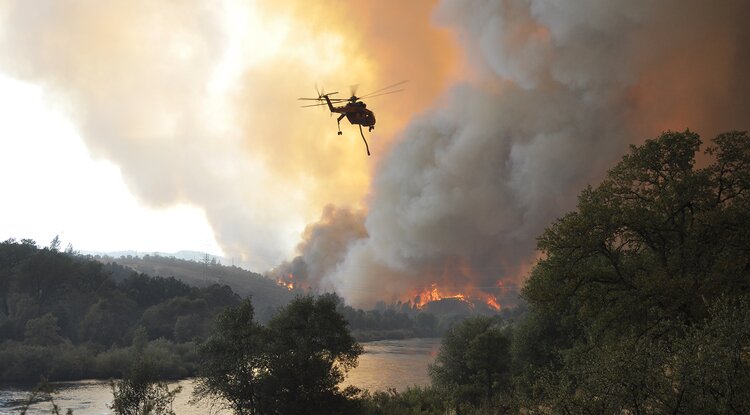
Wildfire Risk in California No Longer Coupled to Winter Precipitation
Fuel buildup from decades of fire suppression plus rising temperatures from climate change means any year may have large fires, a UA tree-ring researcher and her co-authors report.
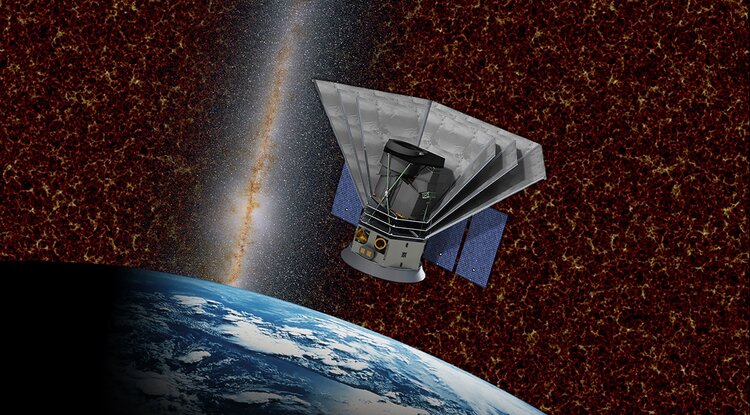
Two Young UA Astronomers Join $242M NASA Mission
The SPHEREx mission will help astronomers, including the UA’s Elisabeth Krause and Tim Eifler, understand how the universe evolved and probe our galaxy for the ingredients of life.
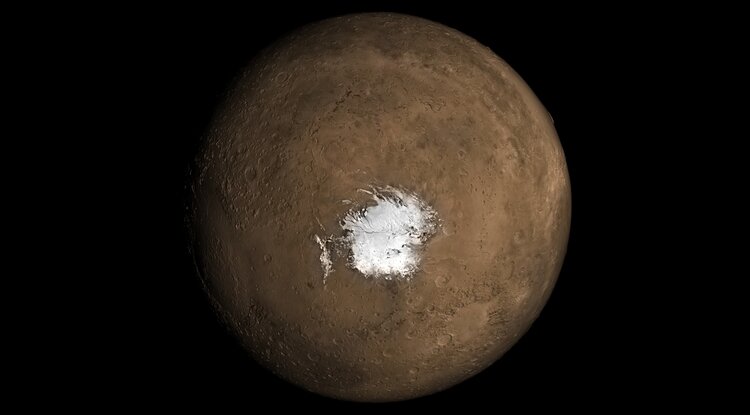
UA Study Suggests Possibility of Recent Underground Volcanism on Mars
A new study conducted by UA planetary scientists suggests volcanoes may have been recently boiling deep below the surface of the Red Planet.

Seeing the Forest Through the Lidar Lens
A team of ecologists used lidar technology to scan the leaf canopy of an Amazon forest and found that trees responded to drought in some surprising ways.
2019 Lecture Series
 T
There Is No Certainty
Not every scientific study gets the answer right. How much should we rely on mining Big Data, which gives less reliable answers than gold-standard experiments? Are randomized experiments too difficult, expensive or unethical to conduct? Or does the human desire for certainty predispose us to an irrational dislike of randomized experiments, one that might be holding science back?
 U
Understanding the Unseen Universe
Astronomical observations constantly grapple with the unseen. More powerful telescopes and bigger computers lead to discoveries but also present us with enigmas like dark energy, dark matter, black holes, big bang, and perhaps even a Planet Nine, none of which are directly observable. The paradigm will continue to evolve as new evidence comes into light.
 C
Climate and the Deep Blue Sea
Global warming is really ocean warming, and we measure it directly with an array of floating robots. Earth system science has transformed our ability to measure and model heat and carbon changes in the atmosphere and ocean. Verification of global carbon agreements are the next frontier for our floating robots and climate models.
 T
The Microbes Shaping Our Lives
Microbes have been traditionally seen as foes that need to be eliminated. Now we are realizing that the millions of microbes we harbor are essential for our health and influence virtually all our characteristics: our immunity and our blood pressure, our weight and our cognition and possibly even our mood. The discovery of the microbial world has just begun but is already revolutionizing biology and medicine.
 T
The Mind-Body Dialogue
The organs of the body and the brain are in a constant conversation. Recently we learned that this conversation is bidirectional. It is widely accepted that thoughts and feelings cause changes in the body, but we are just starting to understand how changes in the body influence the mind. Health and disease can be better understood through the exchange of biological signals between the brain and the body.
 C
Can Intelligence be Measured?
Is ‘intelligence’ a set of decentralized, independent problem-solving modules, or a singular, generalized skill of innovation? Much about the workings of the mind, especially the minds of others, is not intuitive and thus understanding it requires strict scientific approaches. Controversies abound about the how complex, and how big, a brain needs to be to have intelligence emerge.
Recent News


Featured Article

Previous Lecture Feature


Editor’s choice

Lecture Series Extras


 F
Faculty Elected Senior Member of the National Academy of Inventors
The National Academy of Inventors (NAI) has named 66 academic inventors to the inaugural class of NAI Senior Members. Among these are Dong Chul (Jeffrey) Pyun, PhD, professor in the Department of Chemistry and Biochemistry, College of Science at the University of Arizona. NAI Senior Members are active faculty, scientists and administrators with success in patents, licensing, and commercialization. They have produced technologies that have brought, or aspire to bring, real impact on the welfare of society. They also foster a spirit of innovation within their communities through enhancing an inventive atmosphere at their institutions, while educating and mentoring the next generation of inventors.


